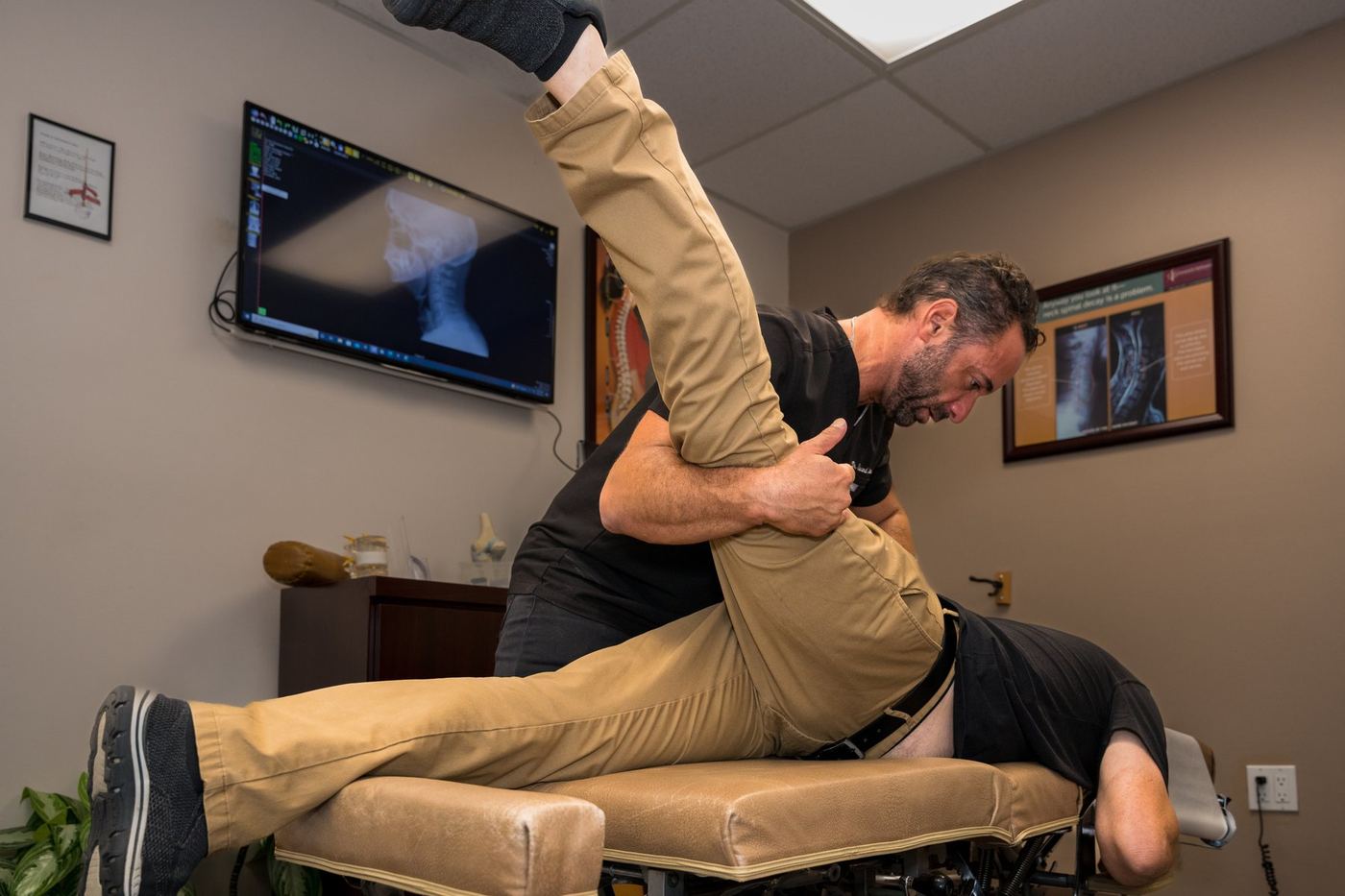
Home exercise handouts
Two protocols, ready to print
These are educational handouts, not a personalized treatment plan. If a movement increases your pain or something below feels wrong, stop and contact Dr. Esposito before continuing.
Miami Chiropractic, 1821 SW 27th Ave, Miami, FL 33145
Scapular retraction & posture progression
For rounded shoulders, tight upper traps, and better posterior shoulder strength.
Key cues (teach the shrug to turn off)
- Long neck: keep shoulders away from ears, no shrugging.
- Back pockets: gently pull shoulder blades down and back.
- Ribs down: exhale, keep your ribcage stacked over your pelvis.
- Feel the work in the mid-back and side ribs, not the upper traps.
Phase 1: Mobility & awareness
- Breathing reset: 5 slow belly breaths, exhale fully, ribs down.
- Doorway pec stretch: 30 to 45 seconds times 2 each side.
- Thoracic extension on a foam roller or chair: 8 to 10 slow reps.
Phase 2: Activation
- Wall angels (controlled range): 2 to 3 sets of 6 to 10 slow reps.
- Band pull-aparts (palms up): 2 to 3 sets of 10 to 15, pause 1 second.
- Prone T, W, Y (light): 2 sets of 6 to 10 each, no neck tension.
Phase 3: Strength & endurance
- Row variation (band, cable, or dumbbell): 3 sets of 8 to 12 with a 2-second squeeze.
- Face pulls (to forehead): 3 sets of 10 to 15, elbows high, neck relaxed.
- Lower-trap raise (prone Y): 2 to 3 sets of 8 to 12, thumbs up.
Phase 4: Boxing carryover
- Shadowboxing posture: 2 rounds of 60 to 90 seconds, focusing on long neck and ribs down.
- Push-up plus / plank plus (serratus): 2 to 3 sets of 8 to 12.
- Pallof press (anti-rotation): 2 to 3 sets of 8 to 12 per side.
Pain is sharp or worsening, you get numbness or tingling into the arm, or symptoms increase with these movements. Move slowly and keep the neck relaxed. If you feel the upper traps burning, reset your ribs and think "shoulders away from ears."
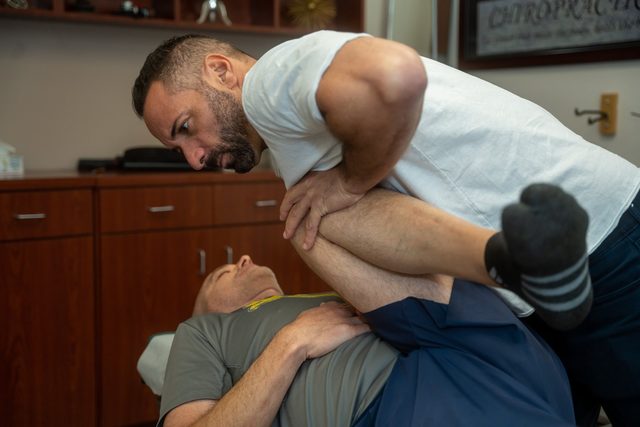
Guided stretching is part of the in-office visit that these handouts build on.
Miami Chiropractic, 1821 SW 27th Ave, Miami, FL 33145
Low back protocol
An exercise-based progression for disc herniations and non-specific back pain.
How to use this sheet
- Choose the phase that matches your symptoms.
- Progress only when pain stays 0 to 2 out of 10 and symptoms are not traveling farther down the leg.
- The early goal is to "centralize" symptoms: pain moves out of the leg and toward the low back, with comfortable motion restored.
Phase 1: Relief & centralization
- McKenzie back extensions (prone press-ups): 10 reps, hold 1 to 2 seconds, 3 to 6 times a day. Stop if leg pain increases or travels farther down.
- Prone on elbows (if press-ups are too much): hold 30 to 60 seconds, 3 to 5 rounds.
- Glute squeezes: squeeze 5 seconds, 10 to 15 reps, 2 to 3 sets.
- Walking: 5 to 15 minutes, 1 to 3 times a day at an easy pace.
Phase 2: Stability & endurance
- Bird-dog leg extensions (hands and knees, extend one leg): 6 to 10 per side, 2 to 3 sets, spine neutral.
- Bridges: 8 to 12 reps, 2 to 4 sets. Squeeze the glutes, avoid over-arching the low back.
- Glute medius work (clamshells, side-lying hip abduction, or lateral band walks): 12 to 20 reps, 2 to 3 sets.
- Core brace with breathing: 5 breaths times 3 to 5 rounds.
Before adding load or rotation, you should be able to walk 15 to 30 minutes comfortably, bridge without cramping or arching, bird-dog without shifting, and bend at the hips without sharp pain.
Phase 3: Strength & hinge
- Hip hinge drill (dowel or wall tap): 8 to 12 reps, 2 to 3 sets.
- Goblet squat to box (pain-free range): 6 to 10 reps, 2 to 4 sets.
- Split squat or step-ups: 6 to 10 per side, 2 to 3 sets.
- Farmer carry: 20 to 40 yards times 4 to 6 trips, stay tall.
Phase 4: Rotation & return to sport
- Pallof press (anti-rotation): 8 to 12 per side, 2 to 4 sets, hold 1 to 2 seconds each rep.
- Half-kneeling cable chop or lift: 6 to 10 per side, 2 to 3 sets, slow and controlled.
- Open-book rotations (thoracic mobility): 6 to 10 per side, easy range.
- Medicine ball rotational throw (only if pain-free and stable): 3 to 5 reps per side times 3 to 5 sets.
New numbness, progressive weakness, loss of bowel or bladder control, fever, or severe unrelenting pain. This is an educational handout and not a substitute for medical advice.
Disc pain patterns vary from person to person. If symptoms persist or you want a sport-specific plan, schedule a visit.
Beyond the handout
These sheets build on what happens in the office
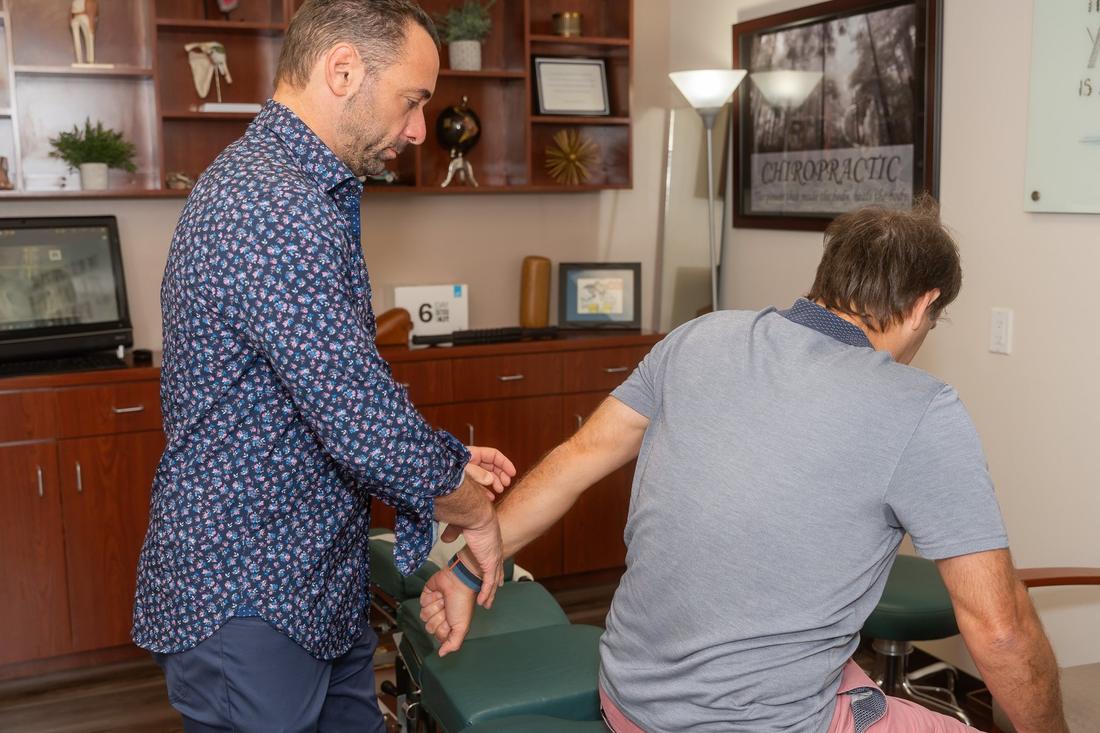
Guided stretching and hands-on assessment in your visits are what these protocols are based on. If a movement does not feel right on your own, bring it up at your next appointment instead of pushing through it.
Ready to move without pain?
Same-day appointments, no referral required. Text or call, or book online in a few minutes.